
Introduction
Accuracy matters more than ever in construction, renovation, interior design, and home improvement. Whether you’re installing kitchen cabinets, laying tile, hanging artwork, or framing walls, even a small measurement error can create costly and frustrating results. This is where a laser level laser becomes an essential tool. By projecting highly visible reference lines across surfaces, it helps users achieve professional-grade alignment quickly and consistently.
Unlike traditional bubble levels, modern laser leveling technology offers speed, convenience, and exceptional precision. Professionals rely on these tools to maintain accuracy on large projects, while homeowners appreciate their simplicity during everyday DIY tasks. From residential renovations to commercial construction sites, laser levels have transformed how measurements and alignments are performed.
This comprehensive guide explores everything about laser level lasers, including how they work, their different types, practical applications, buying considerations, maintenance tips, and future innovations. By the end, you’ll have a clear understanding of how these tools can improve efficiency, accuracy, and overall project quality.
Quick Overview of Laser Level Laser Technology
Before diving deeper, it’s useful to understand the fundamentals of laser level technology and its primary characteristics.
| Feature | Description |
|---|---|
| Purpose | Creates accurate horizontal, vertical, or angled reference lines |
| Accuracy Range | Typically ±1/8 inch to ±1/16 inch at 30 feet |
| Main Users | Contractors, surveyors, designers, DIY enthusiasts |
| Power Source | Rechargeable batteries or replaceable batteries |
| Indoor Use | Excellent visibility and precision |
| Outdoor Use | Often requires a laser detector |
| Common Colors | Red and green laser beams |
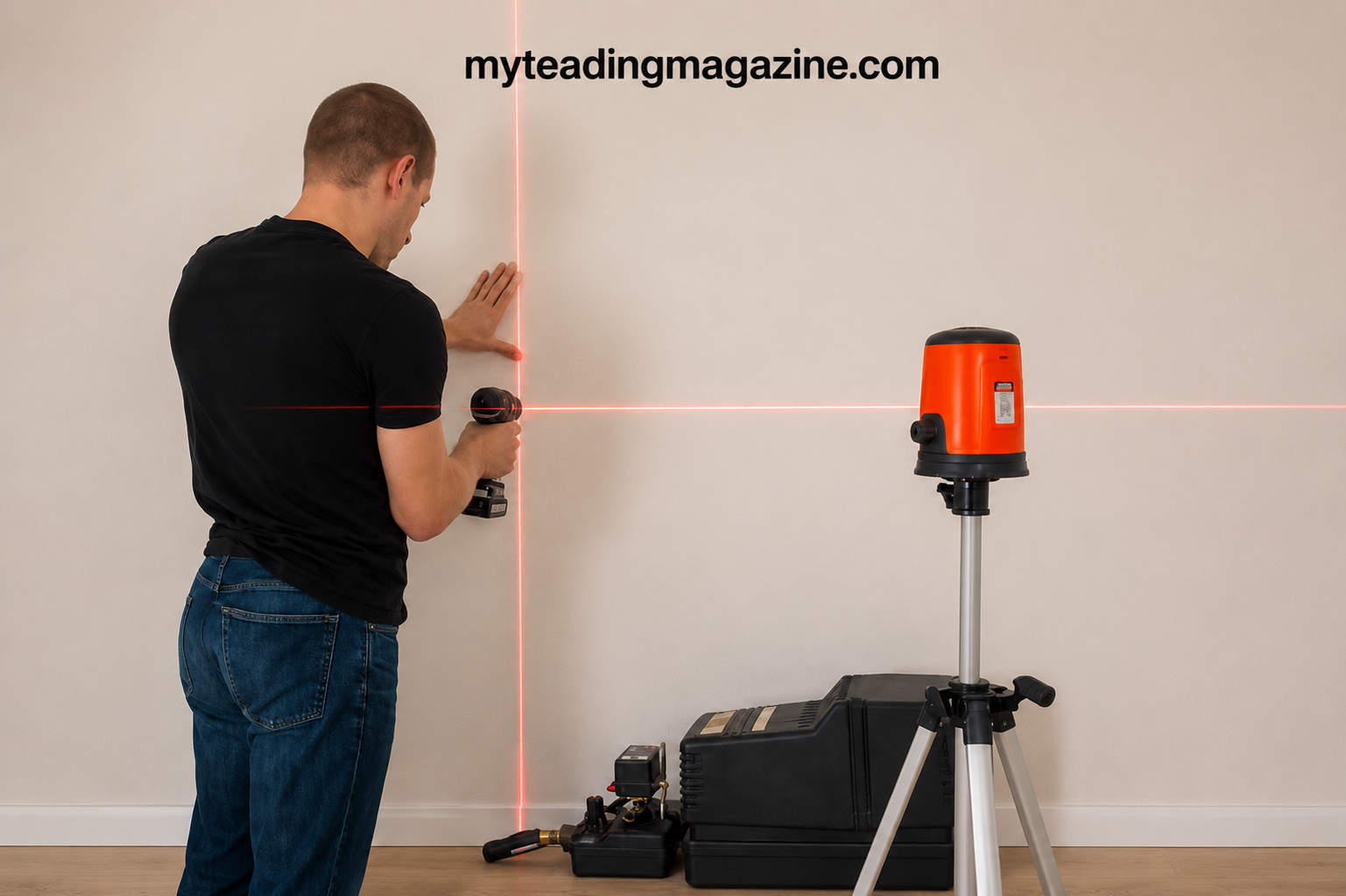
A laser level functions by projecting a beam of light onto a surface. The projected line serves as a precise reference point for alignment, measurement, and installation tasks.
Understanding How a Laser Level Laser Works
At its core, a laser level generates a focused beam of light using a laser diode. This beam is directed through specialized optics that spread the light into a visible line or multiple intersecting lines. The resulting projection provides an accurate guide for positioning objects or establishing reference points.
Many modern models feature self-leveling technology. Internal pendulums or electronic sensors automatically adjust the laser beam when the tool is placed on a slightly uneven surface. This feature eliminates much of the guesswork associated with manual leveling methods.
Imagine trying to hang a row of picture frames using only a tape measure and a traditional level. Small inconsistencies can quickly compound. A laser level projects a perfectly straight line across the entire wall, allowing each frame to align with precision. The same principle applies to flooring, cabinetry, shelving, and structural construction.
Another significant advantage is consistency over long distances. Traditional levels are limited by their physical length, while laser projections can extend across entire rooms or large work areas.
Types of Laser Level Lasers
Understanding Altyazılı P O and Its Growing Digital Appeal
Line laser levels are among the most common and versatile options available. They project one or more straight lines onto a surface, making them ideal for indoor applications such as tile installation, wall decorations, and cabinet alignment.
These tools are particularly popular among homeowners because they are easy to use and relatively affordable. A horizontal line can guide shelf placement, while vertical lines help align wall fixtures or partitions.
Many line lasers also feature cross-line functionality, projecting both horizontal and vertical lines simultaneously for greater flexibility.
Rotary Laser Levels
Rotary laser levels operate by spinning a laser beam rapidly to create a 360-degree reference plane. These tools are commonly used in construction, landscaping, and large-scale outdoor projects.
Because the beam rotates continuously, workers can establish level reference points around an entire job site. This capability makes rotary lasers invaluable for grading land, pouring foundations, and setting elevations.
Although typically more expensive than line lasers, their expanded range and versatility justify the investment for professional users.
Dot Laser Levels
Dot laser levels project individual points rather than lines. They are commonly used for transferring reference points between surfaces.
For example, electricians and contractors often use dot lasers to move measurements from floors to ceilings. This allows precise placement of fixtures, conduit pathways, or structural components.
Their compact size and specialized functionality make them a valuable addition to professional toolkits.
Combination Laser Levels
Combination models integrate multiple laser functions into a single device. They may provide line projections, point projections, and 360-degree coverage simultaneously.
These tools appeal to users seeking maximum flexibility without purchasing multiple devices. Contractors handling varied projects often prefer combination units because they adapt to changing job requirements.
Key Benefits of Using a Laser Level Laser
Improved Accuracy
Precision is perhaps the most obvious advantage. Laser levels reduce human error and provide highly accurate alignment references. This accuracy translates directly into higher-quality work and fewer corrections.
In industries where measurements determine structural integrity or visual appeal, reliable alignment is critical. A small error in framing or tile installation can become increasingly noticeable as a project progresses.
Increased Efficiency
Traditional leveling methods often require repeated measurements and adjustments. A laser level streamlines the process by creating a continuous reference line that remains visible throughout the task.
Workers spend less time checking measurements and more time completing installations. As a result, projects move faster while maintaining quality standards.
Enhanced Professional Results
Professional-looking outcomes depend on consistency. Crooked shelves, uneven tiles, and misaligned cabinets can diminish the appearance of otherwise excellent work.
Laser-guided alignment helps ensure straight lines and symmetrical layouts, improving both aesthetics and functionality.
Versatility Across Multiple Projects
A single laser level can support numerous applications. From hanging curtains and mounting televisions to constructing decks and installing drop ceilings, the same tool serves many purposes.
This versatility increases its value for both professionals and homeowners.
Common Applications in Construction and Home Improvement
Interior Renovation Projects
Interior renovation frequently requires accurate alignment. Contractors use laser levels when installing drywall, cabinetry, countertops, flooring, and trim.
For example, during a kitchen remodel, a laser line can ensure upper cabinets remain perfectly level across an entire wall. This not only improves appearance but also prevents operational issues.
Flooring Installation
Flooring materials such as tile, hardwood, and laminate require careful layout planning. A laser level establishes straight reference lines that guide placement and maintain consistent spacing.
Without accurate alignment, flooring patterns can drift over time, resulting in uneven visual presentation.
Wall Decoration and Furniture Placement
Homeowners often discover that hanging artwork evenly can be surprisingly difficult. A laser projection simplifies the process by creating an instant reference line.
The same approach works for mirrors, floating shelves, curtain rods, and mounted entertainment systems.
Outdoor Construction
Landscaping, fencing, deck construction, and foundation work all benefit from laser-guided measurements.
Outdoor projects often cover larger areas where traditional levels become impractical. Rotary laser systems excel in these environments because they provide broad coverage and reliable elevation references.
Comparing Red and Green Laser Beams
One of the most common purchasing decisions involves choosing between red and green laser technology.
| Characteristic | Red Laser | Green Laser |
|---|---|---|
| Visibility | Good indoors | Excellent indoors and outdoors |
| Power Consumption | Lower | Higher |
| Battery Life | Longer | Shorter |
| Cost | More affordable | Typically more expensive |
| Brightness | Standard visibility | Up to several times brighter |
Green lasers offer superior visibility, especially in bright environments. However, they generally consume more power and cost more than red laser alternatives.
For occasional indoor use, a red laser often provides sufficient performance. Professionals working in larger or brighter spaces may benefit from the enhanced visibility of green technology.
Features to Consider Before Buying
Self-Leveling Capability
Self-leveling systems automatically adjust the laser beam to maintain accuracy. This feature significantly reduces setup time and improves reliability.
Manual leveling remains available on some entry-level models, but self-leveling technology is generally worth the investment.
Working Range
The effective range determines how far the laser remains usable. Small indoor projects may require only 30 to 50 feet of coverage, while construction sites often need hundreds of feet.
Always consider future project requirements when evaluating range specifications.
Durability and Protection
Construction environments expose tools to dust, moisture, impacts, and temperature fluctuations. Durable housing and protective ratings help ensure long-term performance.
Professionals should prioritize rugged construction to minimize downtime and replacement costs.
Mounting Options
Many laser levels support tripods, magnetic mounts, wall brackets, and ceiling clamps. Flexible mounting options improve usability and adaptability across different project types.
A versatile mounting system often increases overall productivity.
Real-World Example: Renovating a Living Room
Consider a homeowner renovating a living room. The project includes installing floating shelves, mounting a television, replacing baseboards, and adding decorative wall panels.
Without a laser level, each task requires repeated measurements and manual verification. Small errors can accumulate, resulting in visible inconsistencies.
Using a laser level laser, the homeowner projects a continuous horizontal reference line around the room. Shelves align perfectly, wall panels remain symmetrical, and trim installation proceeds more efficiently. The final result appears cleaner, more professional, and more visually appealing.
This example illustrates how a single tool can simplify multiple stages of a renovation project.
Maintenance and Care Tips
Proper maintenance extends the lifespan and reliability of laser equipment.
Keep lenses clean using soft microfiber cloths to prevent beam distortion. Dust and debris can reduce visibility and affect projection quality. After use, store the device in its protective case to minimize exposure to impacts and environmental contaminants.
Battery care is equally important. Recharge batteries according to manufacturer recommendations and avoid prolonged storage with depleted power levels. Regular calibration checks also help maintain accuracy over time.
When transporting the tool between job sites, secure moving components to prevent damage. Many self-leveling models include transport locks specifically designed for this purpose.
Emerging Trends in Laser Level Technology
Technology continues to improve the functionality of laser leveling tools. Modern models increasingly incorporate digital interfaces, Bluetooth connectivity, and smartphone integration.
Some advanced systems allow users to monitor settings remotely or document measurements through mobile applications. Others combine laser projections with digital measurement technologies for enhanced workflow efficiency.
Battery improvements are also extending operational time while reducing charging requirements. As electronic components become more sophisticated, laser levels are likely to become even more accurate, durable, and user-friendly.
Artificial intelligence and smart construction systems may eventually integrate with laser leveling devices, creating automated workflows that further improve productivity on job sites.
Why Laser Levels Have Become Essential Tools
The growing popularity of laser levels reflects a broader shift toward precision and efficiency in construction and home improvement. Consumers increasingly expect professional-quality results, even for DIY projects.
A laser level bridges the gap between amateur effort and expert execution. By simplifying alignment tasks and reducing errors, it empowers users to complete projects with greater confidence.
Whether installing cabinets, building structures, or decorating a home, the ability to establish accurate reference lines quickly offers a significant advantage. As projects become more complex, reliable measurement tools become even more valuable.
Conclusion
A laser level laser has evolved from a specialized professional instrument into a practical and indispensable tool for a wide range of applications. Its ability to deliver accurate alignment, save time, and improve project quality makes it valuable for contractors, builders, designers, and homeowners alike.
Throughout this guide, we’ve explored how laser levels work, the different types available, their key benefits, common applications, and important buying considerations. We’ve also examined beam color options, maintenance practices, and future technological developments shaping the industry.
For anyone seeking greater precision in construction, renovation, decorating, or outdoor projects, investing in the right laser level can dramatically improve results. By choosing a model that matches specific needs and maintaining it properly, users can enjoy years of reliable performance and professional-grade accuracy.
Frequently Asked Questions (FAQs)
1. What is a laser level laser used for?
A laser level is used to create accurate horizontal, vertical, or angled reference lines. It helps with construction, remodeling, flooring, cabinet installation, and decorative projects.
2. Are laser levels more accurate than bubble levels?
Yes. Laser levels generally provide greater accuracy over longer distances. They also reduce manual measurement errors and improve consistency across large work areas.
3. Which is better: red or green laser levels?
Green lasers are brighter and easier to see, especially in well-lit environments. Red lasers are usually less expensive and offer longer battery life.
4. Can a laser level be used outdoors?
Yes, many models are designed for outdoor use. Rotary laser levels paired with detectors are particularly effective for landscaping, grading, and construction projects.
5. How often should a laser level be calibrated?
Calibration frequency depends on usage and manufacturer recommendations. Professional users often check calibration regularly, especially after drops, impacts, or extended use.
Meta Description: Discover everything about laser level laser technology, including types, uses, benefits, buying tips, maintenance, and professional applications.






Leave a Reply